

The Optimist's Guide to Making Smarter Mistakes Abroad
A field guide for dreamers, romantics, and people about to wire money to strangers.

This post is for the dreamers. The ones moving abroad. The ones happily suspending every ounce of skepticism they would normally have at home.
Welcome abroad, friends.
Your life is about to become one incredible adventure, but there are a few things worth watching out for before you pack your entire identity into six suitcases and convince yourself that “it’ll all work out.”
Honestly... it will, eventually.
We have all seen it from this side of the pond. Suddenly perfectly rational adults are wiring deposits to complete strangers, buying apartments with “good bones” that actually have moldy bones, and convincing themselves they don’t really need to understand the local bureaucracy because someone in a Facebook group said, “Don’t worry. It all works itself out.”
That someone is usually Sharon from Tampa.
The good news is that it often does work out. The less good news is that it usually works itself out after you’ve cried in three government offices, and questioned every life decision you’ve ever made.
There are a lot of expensive mistakes you can avoid simply by taking off the rose colored glasses before you board the plane. Trust me. I wore them too. Yuri reminded me of that almost daily as I enthusiastically explained how wonderful our new life was going to be.
To be fair... I wasn’t wrong.
I was just aggressively optimistic. Two years later, living here in the south of France, I’m still optimistic. The difference now is my optimism has receipts. It has survived bureaucracy, contractors, paperwork, language mishaps, and enough unexpected adventures that I can confidently say this life really is wonderful.
It just occasionally tries to kill your spirit first.
When we were preparing to move, AI wasn’t the tool it is today. Every night I’d climb into our hot tub in the backyard and disappear into TikTok, Reddit, Facebook groups and every moving abroad rabbit hole the internet had to offer. I bookmarked furniture. Compared grocery stores. Looked at houses I could maybe afford. I researched cars, energy ratings, and the cost of living. I probably knew the average price of French butter before I knew how to order butter in French.
Then I’d switch over to my French lessons, trying to memorize every word I possibly could.
I figured out how to get our dog to France and spent months convinced one missing document would result in Zelda living permanently in airport customs.
If you’re worrying about that right now, let me save you some sleepless nights. The paperwork will arrive. I promise. As someone who worries about things roughly one hundred times more than the average person, I don’t make that promise lightly.
I get excited every time I see someone announce they’re moving abroad.
They’re wide eyed. Hopeful. Dreaming about farmers markets, slower living, affordable healthcare, beautiful homes, good bread, better wine, and finally escaping the rat race.
But there are also a handful of things I think people unintentionally give themselves permission to overlook simply because they’re so excited to begin this new chapter. Those are usually the mistakes that end up costing the most.
I promise you this. France, Portugal, Spain, Italy, or wherever you’re headed is not going to magically fix your life. It won’t fix your anxiety. It won’t fix your situationship. It won’t fix your tendency to ignore giant red flags because “those shutters are so charming.” Some problems are worth bringing with you. Some are worth leaving at the airport.
One thing I notice over and over is how quickly people moving abroad become wildly susceptible to “I know a guy” culture.
Suddenly Sharon from Tampa who moved to Portugal during COVID is treated like an immigration attorney because she types EVERYTHING IN CAPS and finishes every comment with, “Trust me. I’ve done this.”
No offense, Sharon.
Actually... a little offense.
Everyone suddenly becomes an expert because they successfully filled out one visa application in 2021.
Absolutely take advice. Just remember there is a difference between experience and expertise.
When we came over on our scouting trip, we put all our eggs in the Carcassonne basket because Yuri’s sister was living here at the time. We don’t regret that decision for a second.
We also came with a list. A real list. We knew exactly what we wanted in a home. We weren’t desperate. We knew it might take time. We knew it might require renovations. Yuri was firmly against buying something that needed work. I, on the other hand, have always looked at houses the way people look at rescue puppies.
“I can fix that.”
One thing I see quite often is Americans arriving on an incredibly tight timeline to find a property. They rush from showing to showing. They don’t ask enough questions because somewhere in the back of their minds they’re thinking, “We’ll figure it out.”
Is there a sewer connection to the street? Who knows.
Does the kitchen stay? Oops.
What’s that mysterious stain on the ceiling? Probably... character.
The realtor says, “There’s a tiny leak.” You hear, “Easy fix.” What they actually meant was, “Congratulations on your new indoor waterfall every November.”
Money can fix a lot of things. It just can’t fix the fact that you never asked the question. This is honestly where AI has become one of the best moving tools available. Instead of asking, “Is this a nice house?” ask AI, “What are 50 questions I should ask before buying or renting a property in France?”
You’ll suddenly think about drainage, copropriété finances, asbestos reports, insulation, neighborhood noise, annual taxes, easements, roof age, sewer connections, and about forty things that never would’ve crossed your mind in the midst of the excitement.
My guide also covers a lot of these questions. Just saying. Hint. Hint.
One thing I absolutely knew from the beginning? I wasn’t buying anything sight unseen. I see people do this all the time and every single time I think...Oof.
That could be one very rough welcome to your new life.
Does it work out? Absolutely. Sometimes.
I visited our apartment twice for thirty minutes each time. Looking back, even that feels a little reckless. Thankfully, it worked out spectacularly. Success stories absolutely exist.
When we bought our house in Minnesota, it was actually the opposite. I flew out to see it. Yuri bought it without ever stepping inside. His first visit was after we already owned it. Fortunately for him, he trusted me. Fortunately for me, I have excellent taste…or at least that’s the version of the story I tell.
If you’re one of the lucky people where buying or renting sight unseen works out, fantastic. Seriously. But do your homework anyway.
Visit during the day. Visit at night. Visit on a weekday. Visit on a weekend. Walk around the neighborhood. Stand outside for a while. Listen. The last thing you want is to realize after you’ve unpacked every box that your peaceful little street becomes Fight Club every Sunday night.
That actually happened to a friend. They moved in. Domestic disputes next door became a regular occurrence. They didn’t yet know how to call the police. They barely spoke the language. They suddenly dreaded every evening in what was supposed to be their dream home.
That’s a terrible way to begin your adventure.


And while we’re here...
Don’t assume your realtor is looking out for your best interests. They’re looking out for the sale. They’re probably not going to say, “By the way, Saturday nights this corner turns into an outdoor pharmacy.” Some information has a funny way of never making it into the listing description.
In reality, you’re probably not going to find the perfect place on your first visit. In fact, you’re probably not going to find it on your second either.
More often than not, you’ll end up renting first. And honestly? I think that’s one of the smartest things you can do even as someone who bought immediately.
The problem is that once people decide to rent, they often don’t want to make another trip just to find a rental. They know how competitive the market can be, so they start scrolling listings online thinking, “This one looks fine.”
Famous last words.
They arrive exhausted after an international flight, unlock the front door and immediately wonder if they’ve accidentally rented a museum exhibit called « Dust Through the Ages. » The photos looked bright. The reality looked... moist.
Maybe there are lace curtains that haven’t been washed since Jacques Chirac was president. Maybe every piece of furniture has a mysterious floral pattern. Maybe there are twelve porcelain angels watching you sleep. Maybe there’s a life-size statue of Jesus in the corner of the bedroom making aggressive eye contact.
You laugh, until you realize you’re living there now.
Americans tend to think, “We’ll just clean it.” Sometimes you can. Sometimes you discover the previous tenant apparently believed a vacuum cleaner was a government conspiracy.
One friend arrived at their rental after the landlord confidently assured them, “You won’t need air conditioning. The house stays cool.” It did not. It stayed inspirationally warm.
They had shipped a few boxes to me ahead of time, so I dropped everything off at the house. Afterward they called and asked, “So... what did you think?” I had one of those moments where your brain argues with your mouth. Do I tell them or do I let them discover this slowly over the next several months?
I told them. Then I found another apartment that I’d actually seen in person, knew the owner, and they moved.
That’s the point. None of these situations are impossible to recover from. Even buying or renting sight unseen sometimes works beautifully.
Another friend recently moved here after renting without ever seeing the property. Another friend and I already knew the house. We looked at each other and thought...
Oh no. They’re going to hate that place.
A month later they were looking for another rental. Again, not the end of the world. Just an expensive detour. They found a great new rental while their future home is being renovated.
So here’s my four cents.
Not two.
Inflation.
If you’re renting or buying from another country, find someone you trust to physically walk through the property before you arrive. A friend. A relocation consultant. A neighbor. The cousin of your aunt’s hairdresser. Honestly, almost anyone with functioning eyeballs. Don’t rely entirely on beautifully staged photos shot with a camera lens wide enough to make a hallway look like Versailles.
And don’t fall for listing descriptions. Every neighborhood is described as “quiet.”Every view is “breathtaking.” Every terrace is “sun drenched.” Every breeze somehow carries lavender.
Meanwhile, the sewer line outside has been baking in 38 degree heat all afternoon and is doing everything in its power to erase Provence from your memory.
Your first challenges abroad should be figuring out how to set up electricity. How to get internet. How to translate documents. How to explain to the pharmacist that you have absolutely no idea how to pronounce the medication you’re trying to buy. Not wondering how quickly you can break a lease.
Those are the kinds of problems worth having. The other ones?
Most of them can be avoided with a little patience before you ever get on the plane.
Here’s another one people rarely talk about.
Before moving abroad, ask yourself one very important question. Do you actually like the person you’re moving with? I’m serious.

Back home, even the happiest couples spend a good chunk of the day apart. You go to different jobs. Run different errands. Meet different friends. One of you wanders Target for an hour because apparently that’s “relaxing.” The other quietly enjoys the fact that nobody has asked where the scissors are in at least forty-five minutes. Then you retire abroad.
Suddenly your spouse becomes your roommate, travel partner, translator, therapist, financial planner, grocery shopping companion, co-worker, personal assistant.
They’re there.
All.
The.
Time.
You’ll find yourself asking important questions. Did they always chew that loudly?Have they always loaded the dishwasher like they’re playing Tetris? Did they always leave cupboard doors open? And why... why... do they fold towels like that?
There is a correct way. I will not be taking questions.
Moving abroad has a funny way of exposing all the little things you never noticed before because there was enough space in your old life to escape each other for a few hours. Now you’re finishing each other’s French sentences at the bakery, interrupting each other at appointments because you’re both trying to help, and silently thinking, “If you would just stop translating for me, I could actually remember this word.”
It’s a lot. Even great marriages feel that pressure.
Thankfully, Yuri and I genuinely like each other. We’ve found our rhythm. We’ve had the arguments. We also discovered that occasional solo trips are one of the healthiest things we’ve done. As two dads raising a six year old, we’re almost always together. One of us is always close enough in case school calls.
They never call.
But apparently once you’ve been a parent long enough, you simply assume someone is about to need you. Most of the time Yuri handles my chaos with an amount of patience that frankly deserves some sort of international humanitarian award.
But it doesn’t always work out that way for everyone. Sometimes moving abroad shines a giant spotlight on problems that already existed. When every day feels like Saturday and you’ve downsized from 3,000 square feet to 600, there aren’t many places left to dramatically walk away from an argument.
Of course there are also the obvious ones.
Learn some of the language. You don’t need to be fluent. You do need to try. You’re moving for the experience, and the language is part of the experience. Two years later my French is dramatically better. Not perfect. Not even close. My tutor still has to remind me to stop switching back to English whenever my brain decides French is suddenly optional.
Language isn’t just vocabulary. It’s culture. It’s humor. It’s understanding why everyone else laughed and you’re still translating the first sentence.
Most importantly, trust your gut. I’ve had plenty of moments where I’ve thought, “What on earth am I doing?” Judge Judy would’ve looked directly into the camera and called me an idiot. She would’ve had a point.
You do not have to make the biggest financial decision of your life during one scouting trip. Your life abroad is not the vacation you took. If I lived by vacation logic, I’d own homes in about seventeen countries by now.
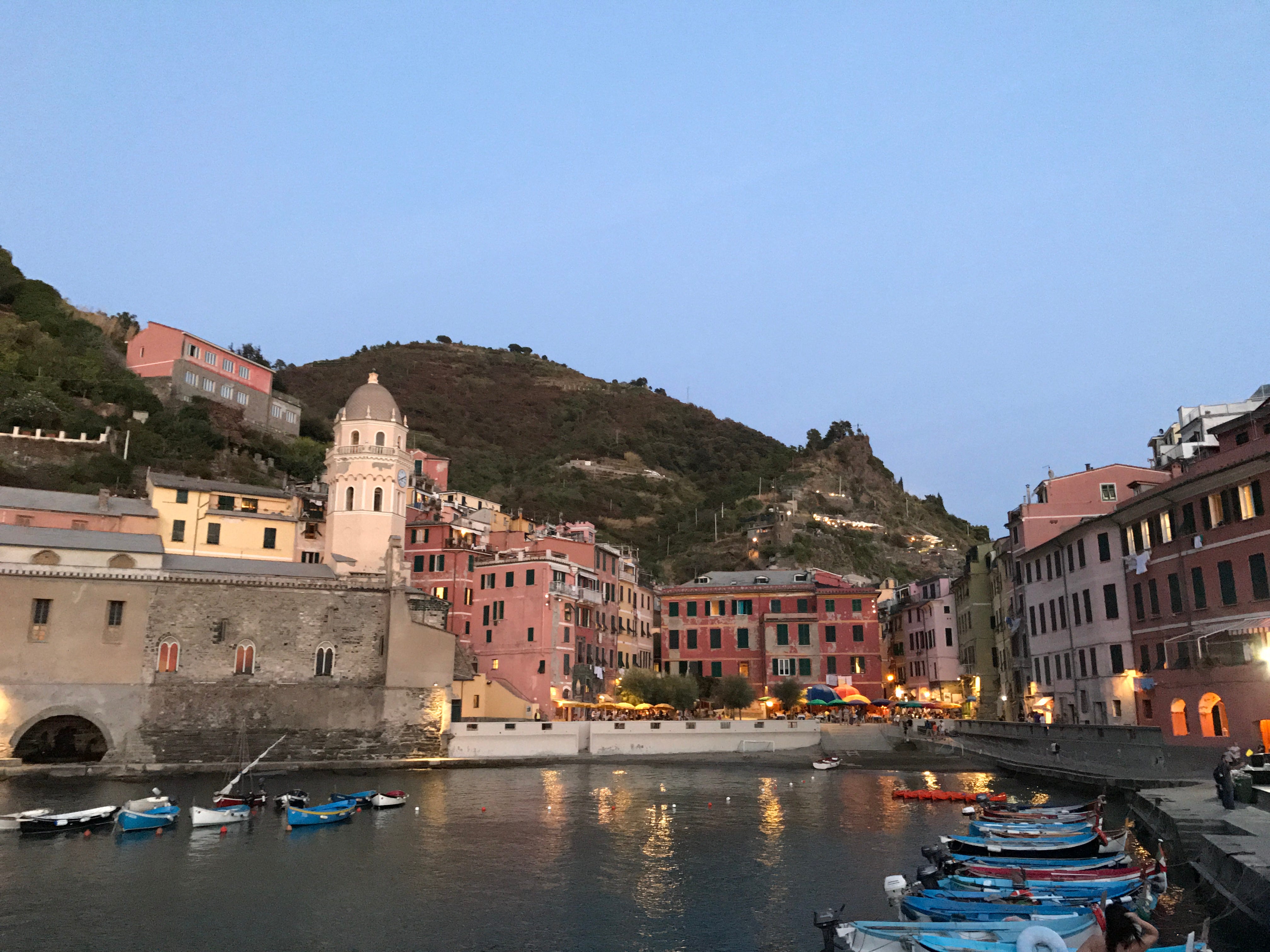
Vacation You isn’t Grocery Store You. Vacation You isn’t January You. Vacation You isn’t “it’s been thirty-eight degrees for three weeks and the neighbor’s rooster has been screaming since 5:12 a.m.” You. Vacation You is having a fantastic time.
Real Life You still has to buy toilet paper.
Don’t lower your standards simply because you’ve crossed a border. Everyone has mold? Maybe. That doesn’t mean you need mold.
Nobody has air conditioning? Great. You still get to decide if you’d prefer not to slowly melt into your own sofa every August. I actually remember saying to Yuri, “Maybe we should just become European.” Thankfully he talked some sense into me. There’s a difference between adapting to local culture and convincing yourself you’re happy with something you never wanted in the first place.
Ask questions. Lots of them. If you’re worried you’re asking too many...you’re probably asking the right amount. Don’t be afraid to sound like the American. They already know you are. You’re surprising nobody in that beret and silk scarf.
Ironically, I’ve learned many locals negotiate far more than newcomers do. New arrivals are often so grateful that something costs less than it did back home that they stop asking questions. They stop negotiating. They stop questioning invoices.
Then one day they’re paying to replace the hot water heater for the second time. Just me?
Don’t buy or rent for the fantasy. Buy or rent for your actual life. That charming hilltop village is magical until you’re carrying groceries uphill in August, trying to find parking or your eighty-year-old parents come to visit and discover your front door requires the cardiovascular fitness of a Tour de France rider.
All of this is simply to say there isn’t one perfect checklist for moving abroad. These are just observations. Lessons. Mistakes. Some mine. Some from friends. Some I’ve watched happen over and over again online. None of this is meant to yuck your yum.
Moving abroad is one of the best decisions we’ve ever made. I would do it again tomorrow. I’d just make a few smarter mistakes. Find local community groups instead of relying only on giant Facebook groups filled with opinions from people who don’t even live where you’re moving anymore.
Make a friend before you arrive if you can. Ask for help. People are often kinder than you expect. Moving abroad should absolutely change your perspective. It should stretch you. It should humble you. It should challenge you. It should make you more adaptable than you’ve ever been. It should not require you to abandon your common sense.
Keep your curiosity. Keep your optimism. Just don’t leave your instincts behind at passport control. The people who thrive abroad aren’t the ones who ignored every red flag because they were chasing a dream. They’re the ones who kept the dream, packed a healthy dose of skepticism alongside it, and built a life they truly love instead of convincing themselves to settle for one they don’t.
Moral of the story: If this all sounds a little cautionary, that’s intentional. But don’t mistake caution for pessimism. I am, and probably always will be, wildly optimistic about moving abroad. I’ve made plenty of mistakes. Some expensive. Some hilarious. Some that make Yuri shake his head and wonder how I’ve survived this long as an adult.
These aren’t reasons not to go. They’re simply reminders that your transition can be smoother if you don’t suspend all common sense the moment your visa is approved.
Save your energy for the real adventures. Like setting up a French phone plan. Like finding a vet who speaks English or trying to explain to the pharmacist that the word you’re looking for is on the tip of your tongue... in another language.
Those are the memories worth making.
Follow along on Instagram where I continue making questionable decisions so you don’t have to. If this post saved you from even one expensive mistake, consider buying me a coffee or by upgrading to a paid subscription for just $5 a month.
Think of it as buying me the caffeine required to survive French bureaucracy.
As a paid subscriber, you’ll receive my guide, Moving to France: The Paperwork, The Panic, The Plan, plus with a yearly subscription you get access to me for a one-on-one chat if you’re planning your own move to France. I’m happy to help you avoid at least a few of the mistakes I enthusiastically tested for you.
Know someone moving abroad? Restack this post and save them from becoming Sharon from Tampa.
P.S. Share one of your biggest “What was I thinking?” moments in the comments. You know, those decisions that seemed brilliant at the time but now make you laugh, cringe, or both. I can’t wait to read them.
No to the hilltop villages. I definitely do not want to carry groceries in August up a steep cobblestone path. I'll visit them for an afternoon and that'll be fine. I hope you have a breezy lavender filled weekend ahead. Wonderful as always Rich!
Rings even more true than I ever imagined it could.